
Leading Neurodiversity: From Accommodation to Competitive Advantage
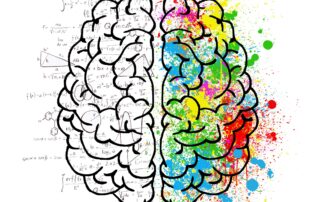
Leaders, Fifteen to twenty percent of your workforce may be neurodivergent. Most of them are not officially diagnosed. Many do not even have language for why they think, focus, communicate, or react differently. And yet, leaders still manage as if there were one “normal” brain. Neurodiversity challenges one of leadership’s most persistent illusions: that high performance looks the same in everyone. It doesn’t. Some minds are wired for pattern recognition and systemic clarity. Others for rapid idea generation, hyperfocus, ethical consistency, emotional intensity, or unconventional problem-solving. Conditions such as ADHD, autism, dyslexia, dyspraxia, giftedness, or high sensitivity are not deficits to be corrected. They are cognitive variations with strategic upside. The question is not whether neurodivergent talent exists in your organization. The question is whether your leadership amplifies or quietly suffocates it. When “difficult” is actually different Consider the leader labeled as “unreliable” because she misses meetings, loses track of [...]

The Science of Trust-Driven Performance
Leaders, What if your team’s performance has less to do with competence, and more to do with cortisol? Before strategy is executed, before decisions are debated, before innovation emerges, something else happens first: nervous systems scan for safety. In milliseconds, your team unconsciously decides whether to contribute boldly, or protect themselves quietly. Leadership starts there. We like to believe performance is driven by clarity, KPIs, and execution discipline. And yes, those matter. But they only work when people feel safe enough to think, challenge, and create together. Co-creation is not a collaboration technique. It is a biological and relational condition for high performance. The hidden driver of team performance Neuroscience shows that the autonomic nervous system continuously evaluates whether we are safe or under threat. Dr. Stephen Porges’ Polyvagal Theory explains how our physiological state determines whether we can engage socially, think creatively, and collaborate effectively. When people feel safe, [...]

Why Leadership is Neurobiological
Leaders, Strategies rarely fail because of poor planning. They fail because of the state of the people executing them. Transformations stall. Meetings circle without resolution. Conflict escalates faster than before. Innovation declines despite strong talent. Leadership teams polarize under pressure. The root cause is often not competence, market conditions, or budget. It is dysregulated nervous systems operating in high-pressure environments. Performance is biologically state-dependent. And states are not mindset choices; they are neurobiological processes. In today’s volatile environment, leadership effectiveness depends less on what you know and more on the state you operate from. The hidden variable in leadership performance Whether a team thinks innovatively or defensively… Whether conflict becomes constructive or destructive… Whether change accelerates or quietly stalls… All of it is profoundly influenced by nervous system states. Under chronic stress, the brain shifts into simplified survival patterns: Black-and-white thinking Reduced empathy Short-term risk avoidance or impulsivity Increased [...]

Coaching in the Age of BANI: Why Leaders Can’t Afford Not to Be Coached
Leaders, The world of leadership has changed, fundamentally and irreversibly. Volatility is no longer the exception, complexity no longer an occasional challenge. We are operating in what is increasingly described as a BANI world: brittle, anxious, non‑linear and incomprehensible. Traditional management logic, linear planning and heroic leadership narratives are no longer sufficient. What leaders need today is not more answers, but better questions, sharper self‑awareness and the ability to stay grounded while everything around them accelerates. This is where coaching enters the stage. Not as a luxury. Not as a remedial intervention. But as an essential leadership capability and a strategic investment in sustainable performance. What coaching is in a business context The International Coaching Federation (ICF) defines coaching as “partnering with clients in a thought‑provoking and creative process that inspires them to maximize their personal and professional potential.” This definition captures the essence: coaching is a partnership, not a hierarchy; a process, not a quick fix; and [...]

Leadership with Impact: Nailing the Essentials
Leaders, Let’s face it: Leadership today isn’t about corner offices or charismatic speeches any longer. It’s about getting people moving in the right direction, together, and for the long haul. Sounds simple. However, I am pretty sure that you know that it is not. Hogan Assessments and the Direction, Alignment, Commitment framework cut to the core of leadership: Revealing who you are, how you lead, and how to drive real alignment and commitment across teams. The Center for Creative Leadership’s Direction, Alignment, Commitment framework (DAC) Based on decades of global research and development with real leaders like yourself, DAC captures what leadership actually produces when it's working. Let’s unpack it. Fast and practical. Direction: Where are we going, and why? Think of direction as the shared vision. Not a glossy poster in the hallway, but a real sense of common purpose that resonates across your team. It's the answer to: What are we trying to [...]

Why Some Teams Just Click – And How You Can Lead One
Leaders, What sets high-performing teams consistently apart from the rest? Is there a special ingredient that makes them click? And more importantly: how can leaders at all levels foster and accelerate this kind of team excellence? The truth is: extraordinary teams are built, not born. And yes, there is a method to the magic. Let’s dive into what makes these teams special, and how you can foster their success. According to Jon Katzenbach and Douglas Smith in „The Wisdom of Teams“, high-performing teams aren’t just well-oiled machines; they are driven by a deeper sense of purpose and a shared accountability that fuels results. They: Set ambitious and meaningful goals Work with efficiency, mutual respect, and commitment Combine complementary skills, often interchangeable Rely on managers who lead by example Are deeply customer-oriented. These traits alone, though, don’t create magic. The real difference? Passion and ownership. These teams believe in their mission. They want to win together. They solve problems quickly, thrive in complexity, and [...]